How to Expense Leadership Burnout Stabilisation
Many organisations sponsor this for at-risk senior leaders.
Just follow these simple steps:
1.
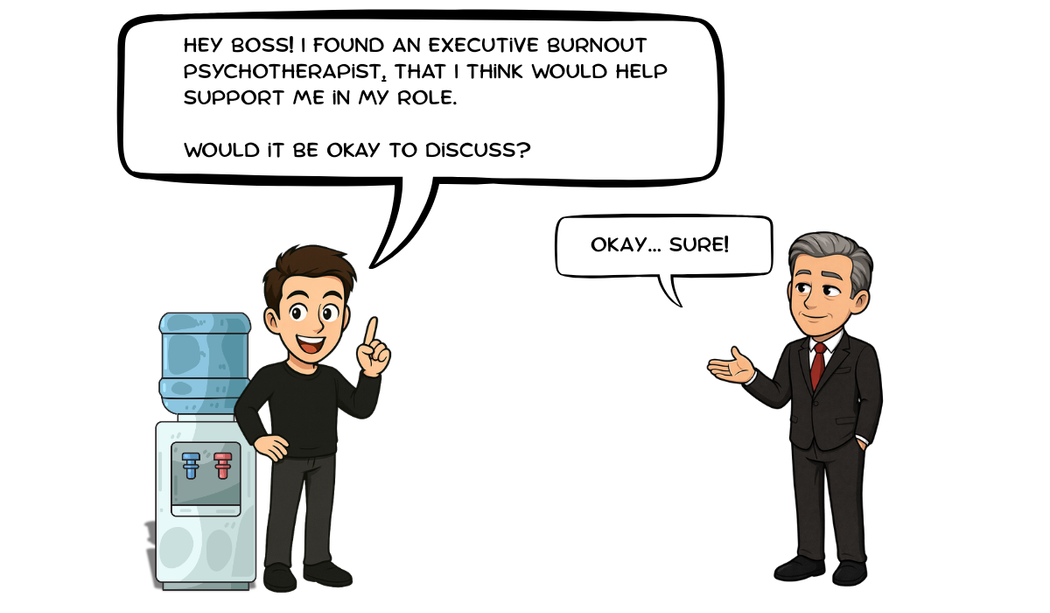
Notify your HR/Manager
Give your manager/HR partner a simple heads-up. This can be done in a 1:1, check-in, or quick message.
Subject: Leadership Stabilisation Support – Quick Discussion

Hi [Manager/HR],

I've identified specialist 1:1 leadership burnout stabilisation that would protect my performance during [high-stakes project/role transition/ongoing pressure].

It's executive psychotherapy designed to maintain decision capacity and retention value.

Could we discuss funding through L&D, executive coaching, or wellbeing budgets?

[Link to https://davidpearce.co/leadership-burnout-stabilisation]

Thanks,
[Your Name]
2.
Frame the Business Case
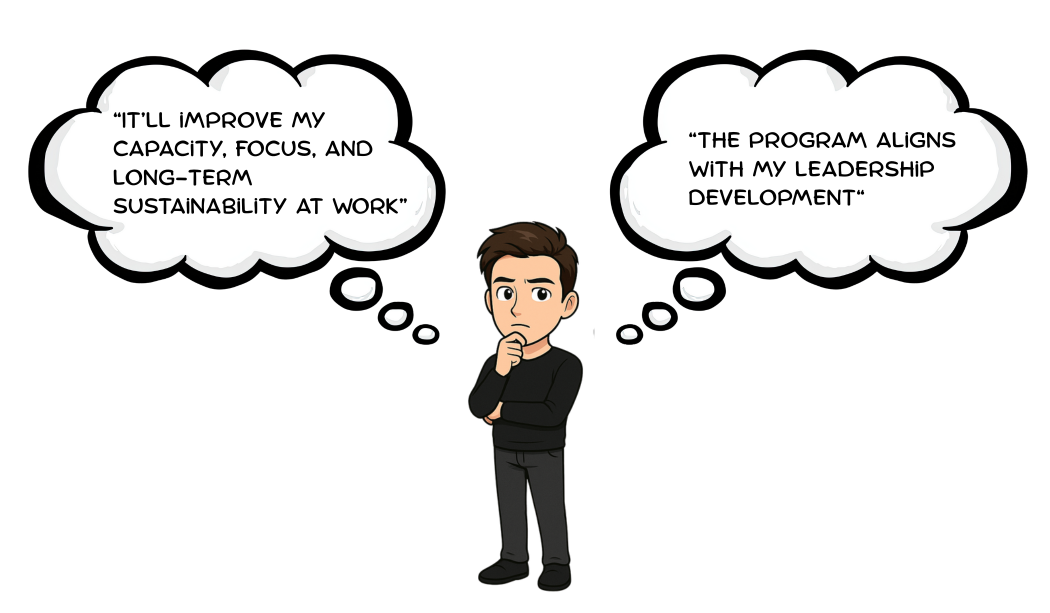
Position it as strategic retention + performance insurance.
Common Budget Lines:
- Executive Coaching / Leadership Development
- Learning & Development (L&D)
- Talent Retention
- Employee Wellbeing / Resilience
- Performance Support
3.
Follow-up message
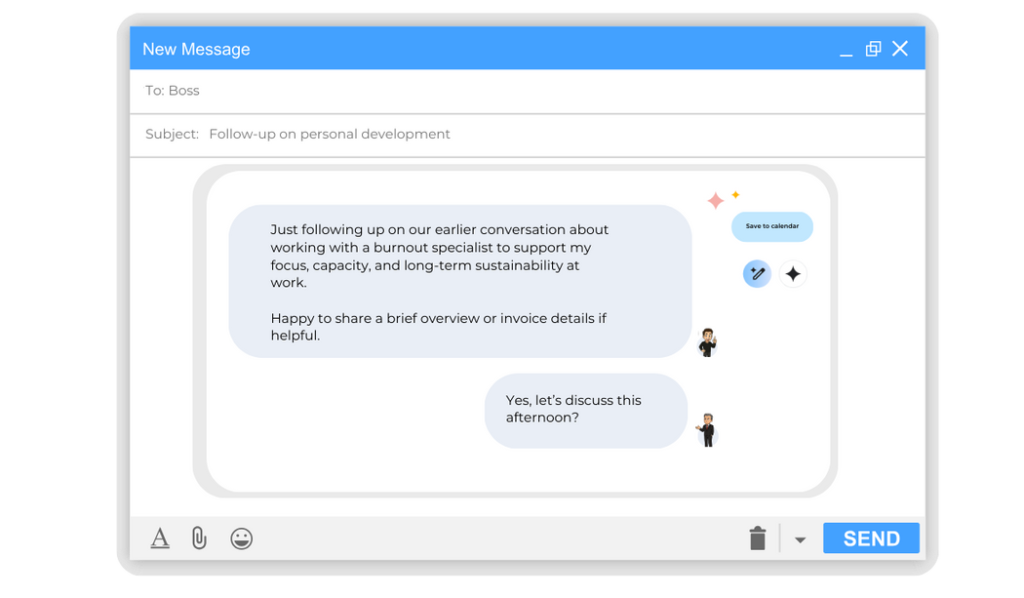
Send a quick reminder to your manager/HR a few days later if you have not heard anything. Give as many details with the text below as you like:
Hi [Name],

Following up on leadership stabilisation support for [specific role challenge/context].

3-month intervention: £9k
Twice-weekly 1:1 sessions + 24/5 support. Online delivery.

This sits alongside existing EAPs—provides specialist depth for my role's demands.

Happy to share proposal or discuss ROI alignment.

Thanks,
[Your Name]
It’s common for managers to ask how this intevertion aligns with your role and goals. Here are some answers you can use as a starting point. Feel free to modify them:
How will this impact your work performance?
Improved focus, decision-making, emotional regulation, and sustainable output. Supported leaders consistently perform better under pressure.
How does this support business goals?
Executive coaching delivers measurable ROI through increased productivity, reduced absence, and stronger retention (often cited at 4–7x return).
Why invest in this instead of risk turnover?
Replacing key staff typically costs 1.5–2x salary. Burnout is a leading cause of senior attrition.
Why not use our EAP/PMI?
EAPs are reactive, underused (≈5% uptake), and not designed for chronic burnout or leadership isolation.
Private medical insurers are designed for short‑term support, typically around 6–12 sessions with a therapist allocated from their directory, and focus mainly on brief symptom relief rather than longer‑term, specialised recovery work.
This support can be a helpful starting point, but many clients find it isn’t enough on its own: it’s not tailored to burnout‑related issues and often stays at a surface level, offering general counselling or CBT rather than deeper, sustained work on the patterns driving their burnout.
Is this confidential and tailored?
Yes. 1:1 support is private, bespoke, and focused on individual stress drivers—unlike generic wellbeing programmes.
What’s the wider organisational benefit?
Healthier leaders create healthier teams. One regulated leader positively impacts engagement, morale, and culture.
🏆 Take care!
p.s if you have any questions, don’t hesitate to reach out at hello@davidpearce.co. See you soon!